SUSTAINABLE DEVELOPMENT GOALS
SDG 7: Affordable and Clean Energy
Ensuring access to affordable, reliable, sustainable and modern energy for all.
Total Energy Used
University Floor Space
Local community outreach for energy efficiency
Universitas Diponegoro (UNDIP) has consistently demonstrated its commitment to community engagement by implementing a wide range of outreach programs that promote energy efficiency and the adoption of clean energy technologies. These initiatives play a vital role in increasing public awareness and enhancing community capacity to implement sustainable energy practices, thereby contributing directly to the achievement of Sustainable Development Goal (SDG) 7: Affordable and Clean Energy.
UNDIP’s community outreach programs empower local communities by transferring knowledge, appropriate technologies, and practical solutions that encourage efficient energy use and the transition toward renewable energy. Through community training, workshops, seminar/conference, technical assistance, demonstration projects, and strategic partnerships with government agencies, industries, schools, and local communities, UNDIP promotes practical energy-saving measures, renewable energy utilization, and sustainable resource management. These initiatives include education on household and industrial energy efficiency, solar photovoltaic applications, picohydro, and sustainable energy management practices. These outreach activities not only enhance community resilience and improve energy literacy but also encourage long-term behavioral changes that support Indonesia’s transition toward a low-carbon and sustainable energy future.
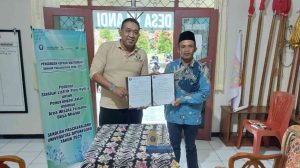
1. Development of a Picohydro System in Mlandi Village, Garung District, Wonosobo Regency, Indonesia, conducted on 29–30 October 2025.
The initiative represents a tangible commitment by the Graduate School of Universitas Diponegoro (UNDIP) to developing free and clean energy technologies that provide practical solutions for rural communities. By harnessing the energy of local water resources through a small-scale picohydro system, the project offers an environmentally friendly and renewable alternative to conventional electricity generation without increasing carbon emissions. Beyond improving access to clean energy, the technology empowers local communities to utilize readily available natural resources in a sustainable and cost-effective manner. The small-scale picohydro system was donated to provide sustainable electricity for the surrounding community by utilizing the kinetic energy of locally available water resources. The prototype generates micro-scale electrical power ranging from several tens to several hundreds of watts (approximately 10–500 W), making it suitable for basic rural energy applications such as LED lighting, mobile phone charging, and small electronic devices. Designed as a decentralized renewable energy solution, the system operates using locally available water flow without producing greenhouse gas emissions or relying on fossil fuels. Its simple design, low maintenance requirements, and affordability make it particularly appropriate for remote communities with limited access to the national electricity grid. In addition to supplying clean electricity, the picohydro prototype serves as a demonstration and educational platform, promoting community awareness of renewable energy technologies and supporting local capacity building. The initiative reflects Universitas Diponegoro’s commitment to translating research and innovation into practical community-based solutions while contributing to Sustainable Development Goal (SDG) 7: Affordable and Clean Energy through the deployment of small-scale, environmentally friendly hydropower technology. The project also strengthens community resilience by encouraging the utilization of local natural resources for sustainable energy production.
 |
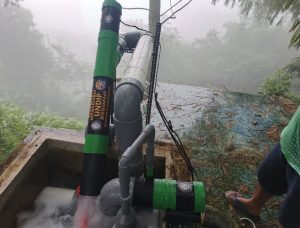 |
Figure 1. Handover picohidro developed by School of postgraduate studies, Universitas Diponegoro to local community at Wonosobo (left). Picohidro installed at the village with capacity of 150 Watt.
Source: https://pasca.undip.ac.id/sps-undip-gelar-penyerahan-dan-penandatanganan-teknologi-picohydro-untuk-pemberdayaan-energi-terbarukan/
2. Training on Black Gold Unplugged: A to Z of Oil and Gas Industry, collaboration between BP ESDM and Universitas Diponegoro.
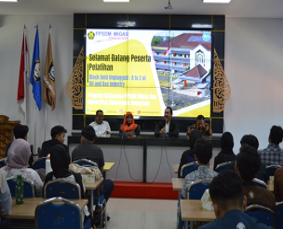
On 11 October 2025, the Human Resources Development Center for Oil and Gas (PPSDM Migas), under the Ministry of Energy and Mineral Resources, collaborated with Universitas Diponegoro’s Vocational School to organize a One Day Training entitled “Black Gold Unplugged: A to Z of the Oil and Gas Industry.” The program aimed to strengthen students’ understanding of Indonesia’s oil and gas sector by bridging academic knowledge with practical industry experience. About 150 studnets attending this training. Participants attended interactive sessions covering career pathways in national and international oil and gas companies, essential competencies required by the energy industry, and the fundamentals of upstream and downstream oil and gas production processes. The training was delivered by experienced PPSDM Migas experts, who also facilitated in-depth discussions on current industry challenges and workforce expectations. Upon completion, participants received official training certificates. This initiative reflects the strong collaboration between government and higher education in developing industry-ready graduates and supporting the sustainable development of Indonesia’s energy sector through competency-based education and professional capacity building
 |
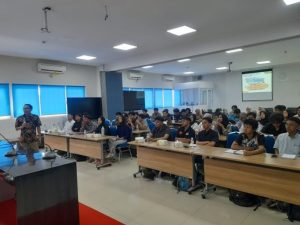 |
Figure 2. Training on oil and gas 11 Oct 2025 at Universitas Diponegoro.
https://bpsdm.esdm.go.id/posts/2025/10/15/ppsdm-migas-sukses-gelar-one-day-training-mahasiswa-undip-kupas-tuntas-a-z-industri-black-gold/4085
3. Energy Day 2025 by Society of Renewable Energy (SRE) Universitas Diponegoro, 27 Sept 2025
Energy Day 2025: Decarbonizing Indonesia was organized by the Society of Renewable Energy (SRE) Universitas Diponegoro to inspire youth participation in accelerating Indonesia’s clean energy transition. Under the theme “Empowering Youth Green Skills for the Central Java Solar Initiative,” the event brought together students, academics, industry experts, and policymakers to strengthen knowledge and collaboration in renewable energy and decarbonization. The program featured a national seminar, interactive workshops, company visits, and national competitions, including a Call for Paper and Business Case Competition, providing students with opportunities to develop innovative solutions for sustainable energy challenges. Expert speakers highlighted the importance of collaboration between government, industry, and young professionals in advancing renewable energy policies and local implementation. The event concluded with awards for outstanding competition participants and a community service project promoting clean energy awareness. Source: https://manunggal.undip.ac.id/energy-day-2025-ide-inovatif-gen-z-dorong-transisi-energi-bersih/
4. 10th International Conference on Energy, Environment, Information System (ICENIS) 2025
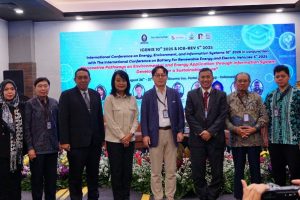
The Graduate School of Universitas Diponegoro successfully hosted the 10th International Conference on Energy, Environmental, and Information Systems (ICENIS 2025) on 26–27 August 2025, under the theme “Innovative Pathways on Environmental and Energy Application Through Information System Development for a Sustainable Future.” The conference brought together leading researchers, academics, policymakers, and practitioners from various countries to discuss innovations in energy, environmental sustainability, and information systems. The program featured keynote presentations by internationally recognized experts, plenary and parallel sessions, interactive scientific discussions, and awards for Best Paper and Best Presenter. ICENIS 2025 strengthened international research collaboration, facilitated knowledge exchange, and demonstrated Universitas Diponegoro’s commitment to advancing scientific innovation and sustainable development by addressing global challenges in energy, environmental management, and digital technologies. About 200 participants from local, national and international participants have attended the conference.