
On August 19-22, 2022, Diponegoro Marine Biodiversity Project (DMBP) held an environmental DNA (eDNA) sampling and training at Karimunjawa Islands. This activity collaborated with Yayasan Biodiversitas Indonesia (BIONESIA). It was led by Ni Kadek Dita Cahyani, Ph.D. (lecturer from the Biology Department, Faculty of Science and Mathematics), as the Principal Investigator of this research project. This program aims to assess the marine fish biodiversity at Karimunjawa Islands in different zonation as a conservation management system Karimunjawa Islands. Diponegoro Marine Biodiversity Project (DMBP) is a marine biodiversity project under Universitas Diponegoro supervised by Prof. Ambariyanto, M.Sc. The activity held by DMBP truly supported the achievement of SDGs14 (Life below water) and SDGs 17 (Partnerships for the goals).
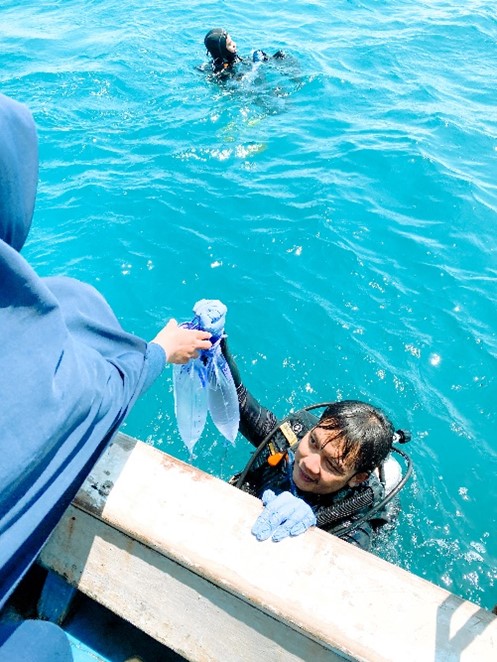
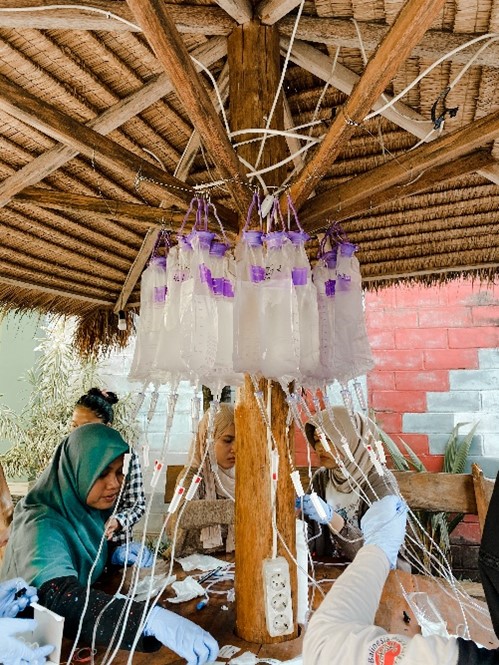
The activity of eDNA sampling and training started by getting one liter of water from each site that was filtered for eDNA purposes. Apart from field sampling for eDNA research, this activity was also conducted as a training event for researchers and students. The training aims to introduce the students to one of the advanced molecular methods to detect biodiversity, especially marine biodiversity. We invited fifteen students and researchers, consisting of graduate, undergraduate, and post-doctoral from Universitas Diponegoro, Trunojoyo University, and Universitas PGRI Ronggolawe. All participants have been trained to do standard protocol for eDNA water sampling, including how much water should be taken, how to filter the water for eDNA using a vacuum pump machine and gravitational method, and sample preservation before laboratory works. This activity was also attended by a representative authority from Balai Taman Nasional Karimunjawa (BTNKJ).
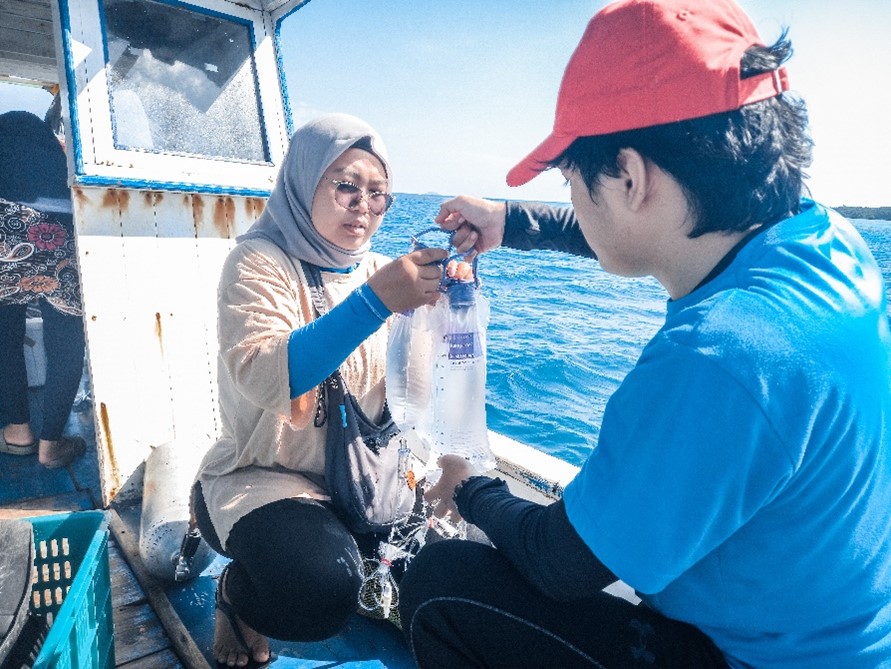
The activity was full of fun and very insightful for the participants. This eDNA tool was one of the newest methods to asses biodiversity in Indonesia, including the marine environment. One participant, namely Galank Janarkho (a master’s student at the Faculty of Fisheries and Marine Science at Universitas Diponegoro), also said that this activity had grown his mindset about a new method to asses a broader scale of marine biodiversity rapidly than the conventional method such as a visual census.
Diponegoro Marine Biodiversity Project has laboratory to observe the research object. The laboratory is on the 6th floor at Undip Integrated Laboratory (Lab Terpadu Undip), Universitas Diponegoro. If you want to learn more about our works and projects, please visit us at https://dipbio.undip.ac.id/